The average roofing close rate sits between 30 and 35 percent. The companies winning their markets close at 45 to 55 percent. Same leads. Same market. Same trucks in the driveway. Different system inside the company.
A lot of roofing owners don’t think of themselves as salespeople. They came up through production. They know how to run a crew, read a roof, and manage a job site. Sales felt like someone else’s job.
That thinking is costing them money every single day.
It doesn’t matter how good your work is. It doesn’t matter how long you’ve been in business or how strong your reputation is in your market. If your company can’t sell consistently, at a high level, across every person who touches a customer, you don’t have a scalable business. You have a good trade shop.
Those are two very different things.
Most owners who struggle with revenue think they have a lead problem. They want more calls, more Angi leads, more Google traffic. So they spend more on marketing.
But more leads fed into a broken sales process just produces more waste. I’ve watched companies spend $30,000 a month on advertising and close less than 20 percent of what came in. The problem wasn’t lead volume. It was everything that happened after the lead arrived.
Before you spend another dollar on marketing, know your close rate. Know your booking rate. Know what your CSRs are saying when they pick up the phone and what your sales reps are doing when they sit across from a homeowner.
Fix the process first. Then scale the lead flow.
Most owners think the sale happens at the estimate. It doesn’t. It starts the second someone calls your office.
Your CSR is your first salesperson. How they answer the phone, how they handle objections, how they set the appointment, how they confirm it the day before. All of that affects whether the rep even gets a shot at the job.
A weak CSR performance means appointments don’t get set. Appointments that do get set don’t get kept. Your sales rep shows up to a homeowner who was never properly prepared for the conversation.
And here’s the speed-to-lead reality in 2026. Businesses that respond within five minutes are 100 times more likely to make contact than those who wait 30. Wait an hour and you’ve lost 80 percent of the conversion value. Wait the industry average of 47 hours and you’re competing for scraps.
Train your CSRs like salespeople. Give them scripts. Role play with them. Track their booking rate weekly. Hold them accountable to a number. That single change will move your close rate before you ever touch the field sales process.
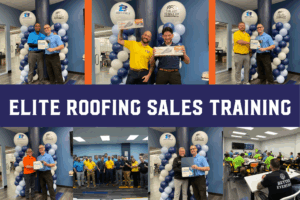
A sales process isn’t a script. It’s a repeatable system every rep follows on every appointment, every time.
It starts with the pre-call. What does your rep know about the homeowner before they show up? What’s the job scope? How did the lead come in? A rep who shows up informed closes at a higher rate than one who shows up cold.
Then the inspection. Are your reps doing a full roof inspection on every appointment or eyeballing it from the driveway? The inspection is where you build credibility. It’s where you find the real scope of work. Skipping it leaves money on the table.
Then the presentation. Reps should present options, not quote one number. Good, better, best. Every time. Homeowners given options close at higher rates and at a higher average job value. That’s not theory. That’s the data across every company we’ve worked with inside LB Capital’s portfolio.
Then the close. Does your rep have a process for handling “let me think about it” or “I want to get another quote”? If the answer is no, you’re losing jobs you should be winning.
A sales process only works if someone is holding it accountable.
That means weekly one-on-ones. Not check-ins. Number reviews. Close rate, average job value, objections they ran into, deals they lost and why. Done consistently, that conversation is where your sales team actually improves.
It also means ride-alongs. Get in the truck. Watch your reps run an appointment. You will learn more about your sales problems in one ride-along than in a month of weekly meetings.
Most owners don’t do this because they’re too busy. But if your sales team is underperforming, that’s where your time belongs.
Here’s the bigger picture. When you eventually sell your company, a buyer is going to look at your revenue trends, your margins, and your repeatability. Can this business grow without the owner in every sales conversation? Is there a process a new rep can be trained on and plugged into?
A company with a documented, proven sales system is worth more than a company where sales performance depends entirely on one or two people. Buyers pay for scalability. A real sales process is one of the clearest signals your business can scale.
Build the process now. Train your team to it. Hold it accountable. The revenue you generate this year matters. The company you’re building for the future matters more.
If your close rate, booking rate, and average job value are not improving quarter over quarter, you don’t have a sales team. You have a group of people winging it.
A free first step: pull up the “How Roofing Company Owners ACTUALLY Build Wealth” episode of the Build It To Sell It™ podcast. Lance breaks down the difference between revenue and value, and why a tighter sales process is the fastest way to move the multiple on your business.
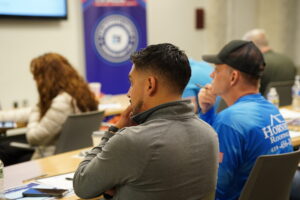
When you’re ready for hands-on, operator-led training, take a look at the Sales Training Program. Built for roofing, HVAC, and home service companies. No generic sales theory. The actual playbook used inside the LB Capital portfolio.
Build It To Sell It™ is an operator-led growth platform built exclusively for home service business owners who want to create stronger, more profitable, and more valuable companies. Rather than offering generic business advice or motivational coaching, Build It To Sell It™ provides proven operating systems, hands-on coaching, peer accountability, and real-world strategies developed by entrepreneurs who have successfully built, scaled, and sold businesses.