The Build It To Sell It Conference 2026 offers home service owners practical leadership lessons around building companies that can operate without constant owner involvement. Key areas include developing capable leaders, creating accountability, documenting repeatable systems, understanding financial performance, strengthening sales and marketing leadership, and delegating authority instead of simply assigning tasks. The Conference’s focus on sales, marketing, financial literacy, and systems & processes gives contractors practical ideas they can take back and implement in their businesses. Through Business Coaching For Contractors, those lessons can be reinforced through ongoing accountability, leadership development, and execution. The broader goal is to reduce owner dependency and build a more profitable, scalable, transferable business.
Running a home service company gets more complicated as it gets bigger. More employees mean more decisions. More customers mean more opportunities for things to go wrong. More revenue can mean more operational pressure if the business does not have the systems and leadership structure to support it.
That creates a leadership challenge for owners: Can your team execute without you being in the room?
That question sits at the center of building a scalable home service business. The owner cannot remain the person approving every sale, solving every customer problem, making every hiring decision, reviewing every financial issue, and stepping into every operational problem.
The Build It To Sell It Conference 2026 is designed around practical business-building lessons for home service contractors, with sessions and strategies focused on areas such as sales, marketing, financial literacy, systems, and processes. For owners attending, those topics are not separate from leadership. They are the tools leaders use to build companies that can perform consistently without depending on one person.
This is also where Business Coaching For Contractors can become an important extension of the learning process. A conference can introduce new ideas and operating strategies. Coaching and accountability can help owners turn those ideas into systems that actually get implemented.
The goal is not simply to become a better manager. It is to build a business that can operate, grow, and create value without everything depending on the owner.

Owner dependency usually develops gradually.
An owner closes the biggest sales because they are good at it. They approve pricing because they know the margins. Employees bring difficult customer issues to them because they know the owner will solve them. Hiring decisions stay with the owner because the business has always worked that way.
Eventually, the owner becomes the answer to almost everything.
As the company grows, that model becomes difficult to sustain. The owner may still be responsible for:
The result can be a business that has grown in revenue and headcount without growing its leadership capacity.
One of the important leadership concepts owners can explore at the Build It To Sell It Conference is how systems and processes can reduce that dependency. Instead of asking, “How do I keep up with everything?” the better question is, “What needs to exist so my team can handle more without me?”
Key takeaway: Growth should increase the company’s capacity, not simply increase the number of decisions that come back to the owner.
Leadership becomes difficult when expectations are unclear.
Telling a manager to “own operations” is not enough. What does that actually mean? Which decisions can they make? Which numbers are they responsible for? When should they escalate a problem? How often will performance be reviewed?
Effective accountability requires four things:
Scorecards and KPIs make those expectations visible. Leadership meetings create a regular opportunity to review performance and address problems before they become larger issues.
What Accountability Looks Like in a Home Service Company
Depending on the role, leaders may need visibility into:
Financial literacy is particularly important because leadership decisions eventually show up in the numbers. A company can be busy and still have weak margins or poor cash flow.
The Conference’s focus on financial literacy can help owners understand how the numbers behind the business should inform operating decisions rather than simply being reviewed after the fact.
Key takeaway: Accountability becomes easier when everyone knows what they own, how success is measured, and when performance will be reviewed.
Every home service company has moments when someone has to step in and save the day.
The problem comes when “saving the day” becomes the operating model.
If one dispatcher knows how everything works, one salesperson knows how to close difficult jobs, or one manager is the only person who understands a critical process, the company has created another form of dependency.
That can include:
SOPs, checklists, training materials, and playbooks give employees a defined standard to follow. They also make it easier to train new employees and hold existing employees accountable.
These systems-and-processes concepts are central to the kind of operator-focused learning the Build It To Sell It Conference is designed to provide.
Key takeaway: Great leadership isn’t about being the person who can fix everything. It’s about building a company that doesn’t need you to fix everything.
Many home service owners start as technicians, installers, salespeople, or hands-on operators. Doing the work themselves is often how they built the business in the first place.
But the role has to change as the company grows.
Delegation is part of that transition, but effective delegation is more than handing someone a list of tasks. It means transferring ownership.
A manager should know:
Delegate Authority, Not Just Tasks
If a manager is responsible for an outcome but needs the owner’s approval for every decision, they do not really own that outcome.
For example, an operations manager might be responsible for technician productivity and scheduling efficiency. That manager needs enough authority to adjust schedules, address performance issues, and make routine operational decisions within clearly defined boundaries.
The owner can still review the numbers without controlling every individual decision.
That creates leadership capacity instead of simply redistributing tasks.
Leadership development should not begin when the company is already struggling to fill a management position.
Owners can identify high-potential employees before they receive a formal leadership title and begin developing skills such as:
This is particularly important because being an excellent technician or salesperson does not automatically prepare someone to manage other people.
Turn High Performers Into Leaders
A high performer who becomes a manager has to learn to stop measuring their value by how much work they personally complete.
Their job changes from doing the work to helping others perform better.
That means learning how to:
Leadership development is therefore part of scaling. The more capable leaders a company has, the less dependent it becomes on the owner.
Sales is not just a sales department issue. It is a leadership issue.
The Conference’s sales focus is centered on practical systems that can help home service companies improve conversion without simply lowering price.
That means owners and sales leaders should think beyond total revenue.
They need to understand:
Sales Leaders Should Manage the Process, Not Just Revenue
A sales manager should be able to look at the numbers and ask better questions.
These questions move sales management away from simply asking, “How much did we sell?” and toward understanding whether the sales function is actually repeatable.
That matters because predictable sales performance creates more predictable growth and reduces the pressure on the owner to personally generate revenue.
A leader who does not understand the financial performance of the business is operating with incomplete information.
Revenue alone does not tell an owner whether a company is healthy.
Leaders should understand metrics such as:
Understanding these numbers changes everyday decisions.
A hiring decision affects labor costs. Pricing affects gross margin. Marketing affects customer acquisition cost. Capacity affects how much work the company can take on. Compensation affects profitability.
This is why financial literacy belongs in leadership development.
The Build It To Sell It Conference’s financial literacy focus gives owners an opportunity to think about the numbers behind their decisions rather than treating financial reporting as something that happens after the operating decisions have already been made.
The shift is simple: don’t just manage activity. Manage the financial outcome.
Marketing creates opportunities. Sales converts those opportunities. Operations fulfills what was sold. Finance determines whether the company actually made money.
Leadership needs visibility across that entire chain.
More leads do not automatically solve a sales problem.
A leader should understand the relationship between:
If lead volume is increasing but close rates are falling, the problem may not be marketing
If sales are increasing while margins decline, the company may have a pricing or sales-management problem.
If marketing produces leads but the team does not respond quickly, the issue may be operational.
The Conference’s emphasis on building a marketing machine that consistently fills the pipeline can help owners look at marketing as part of a larger business system rather than an isolated function.
Key takeaway: Leaders need to understand the entire path from lead generation to profitable revenue.
Company culture is not created by a slogan on the wall.
Employees watch what leaders tolerate, reward, reinforce, and ignore.
If poor customer treatment is tolerated, employees learn that customer service is not actually a priority.
If strong performers are held accountable while underperformers are repeatedly excused, employees notice.
If managers are expected to communicate professionally but the owner regularly ignores those standards, the organization gets a different message.
Leadership establishes the standard through daily decisions involving:
Leaders Set the Standard Through Their Actions
Employees will pay attention to what happens when a mistake is made.
Does the leader take responsibility for problems instead of immediately assigning blame?
These behaviors shape the organization far more than an occasional team event.
There is a difference between knowing what is happening in the business and controlling everything that happens in the business.
Micromanagement often develops because owners do not have enough visibility into performance. Without reliable systems and metrics, the owner feels compelled to stay close to every decision.
The broader goal behind the Build It To Sell It Conference is to help owners think about how systems, sales, marketing, financial literacy, and operations can work together to create a more profitable and valuable business.
The objective is not to disappear from the company. It is to make sure the company can continue performing when the owner is not personally involved in every decision.
Key takeaway: The goal isn’t to know everything happening every minute. It’s to build enough visibility and accountability that you don’t have to.
The value of attending a business event should not be measured by how many notes an owner takes.
It should be measured by what changes after they get home.
Here are several questions owners can use to turn Conference lessons into action.
Find Your Biggest Owner Dependency
Ask:
Identify the System Behind the Problem
Ask:
Define the Numbers
Determine:
Build the Leadership Bench
Identify:
Create an Accountability Rhythm
Consider establishing:
Take One System From the Conference and Implement It
The goal should not be to return with a notebook full of ideas that never leave the desk.
Take one process, one KPI, one leadership practice, or one accountability system and put it into operation.
That is consistent with the Conference’s practical promise: “Leave With Systems You Can Use Monday.”
Leadership development is not separate from enterprise value.
A business with capable leaders, documented systems, predictable financial performance, and lower owner dependency is positioned differently from a business where the owner remains the central decision-maker.
Stronger leadership can support:
Increasing revenue is important, but revenue alone does not define the strength or value of a home service company.
The bigger objective is to build an organization that can continue producing results as the owner steps out of individual decisions.
That is where leadership becomes an enterprise-value issue.
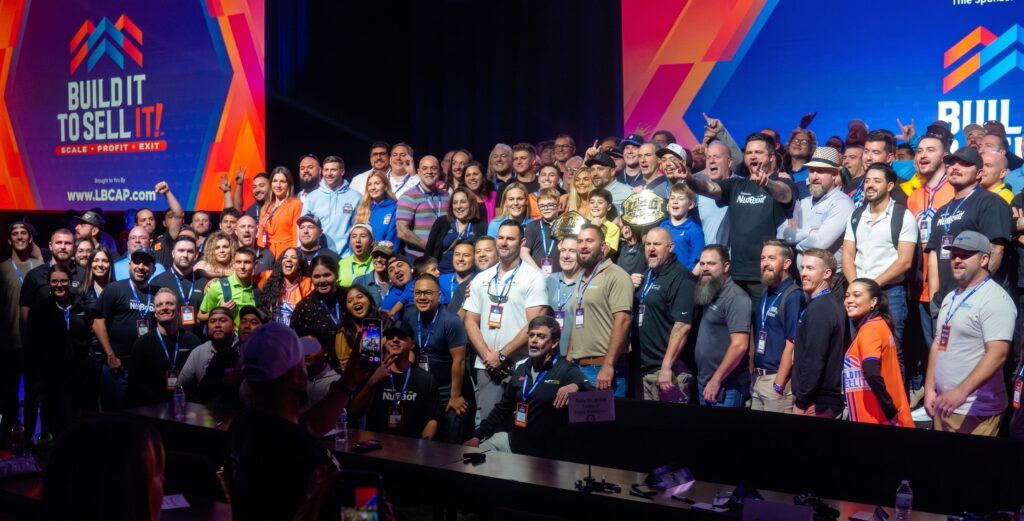
The BITSI Conference Event 2026 is positioned around practical learning for home service business owners, not theory disconnected from day-to-day operations.
The current Conference information highlights:
The event is scheduled for December 7–9, 2026, at The Diplomat Beach Resort in Hollywood, Florida.
For an owner thinking about leadership, the value is not simply hearing from another business speaker. It is getting exposure to operating ideas that can be evaluated against the realities of their own company.
What happens with those ideas afterward is where the real work begins.
Several leadership mistakes repeatedly reinforce owner dependency:
These issues are connected.
What happens with those ideas afterward is where the real work begins.
Weak systems create more questions for the owner. Too much owner involvement limits leadership development. Limited leadership capacity makes growth harder to manage. And when growth becomes dependent on the owner, scalability becomes harder to achieve.
They are about building the infrastructure that allows a company to perform without the owner being involved in every decision.
That means:
The Conference brings these ideas together through practical discussions around sales, marketing, financial literacy, systems, and processes. The objective is not theory for theory’s sake. It is to give operators ideas and systems they can take back to their businesses and put to work.
And for owners who want continued support turning those lessons into execution, Business Coaching For Contractors can extend that work through ongoing accountability, systems development, leadership development, and implementation.
Ultimately, the goal is not simply to become a better manager.
It is to build a company that can perform, grow, and create value without everything depending on the owner.
That is the operator mindset behind Build It To Sell It: build a business worth owning today and worth selling tomorrow.
Attend Build It To Sell It Conference 2026
The Build It To Sell It Conference 2026 is scheduled for December 7–9, 2026, at The Diplomat Beach Resort in Hollywood, Florida.
For home service owners looking to strengthen leadership, improve systems, understand the numbers, and build a more scalable company, the Conference offers an opportunity to get in the room with other operators and industry leaders and bring practical ideas back to the business.
Home service owners need more than people-management skills. They need the ability to delegate ownership, establish accountability, develop managers, understand financial performance, build repeatable systems, and make decisions based on measurable business outcomes.
Contractors can reduce owner dependency by documenting critical processes, developing capable managers, defining decision-making authority, establishing KPIs, and creating regular accountability rhythms. The objective is to make the team capable of handling routine decisions without constant owner approval.
Accountability gives employees and managers clear expectations and measurable outcomes. When responsibilities, KPIs, and review processes are defined, leaders can address performance issues using information rather than assumptions.
Leadership can affect scalability and transferability by determining how dependent the company is on its owner. A business with capable managers, documented systems, predictable performance, and clear accountability can be easier to operate without the owner being involved in every decision.
The Build It To Sell It Conference 2026 is designed to provide practical learning around sales, marketing, financial literacy, systems, and processes. Owners can use those lessons to evaluate their own businesses, identify areas of owner dependency, strengthen leadership, and implement more repeatable operating systems.
Build It To Sell It™ is an operator-led growth platform built exclusively for home service business owners who want to create stronger, more profitable, and more valuable companies. Rather than offering generic business advice or motivational coaching, Build It To Sell It™ provides proven operating systems, hands-on coaching, peer accountability, and real-world strategies developed by entrepreneurs who have successfully built, scaled, and sold businesses.